




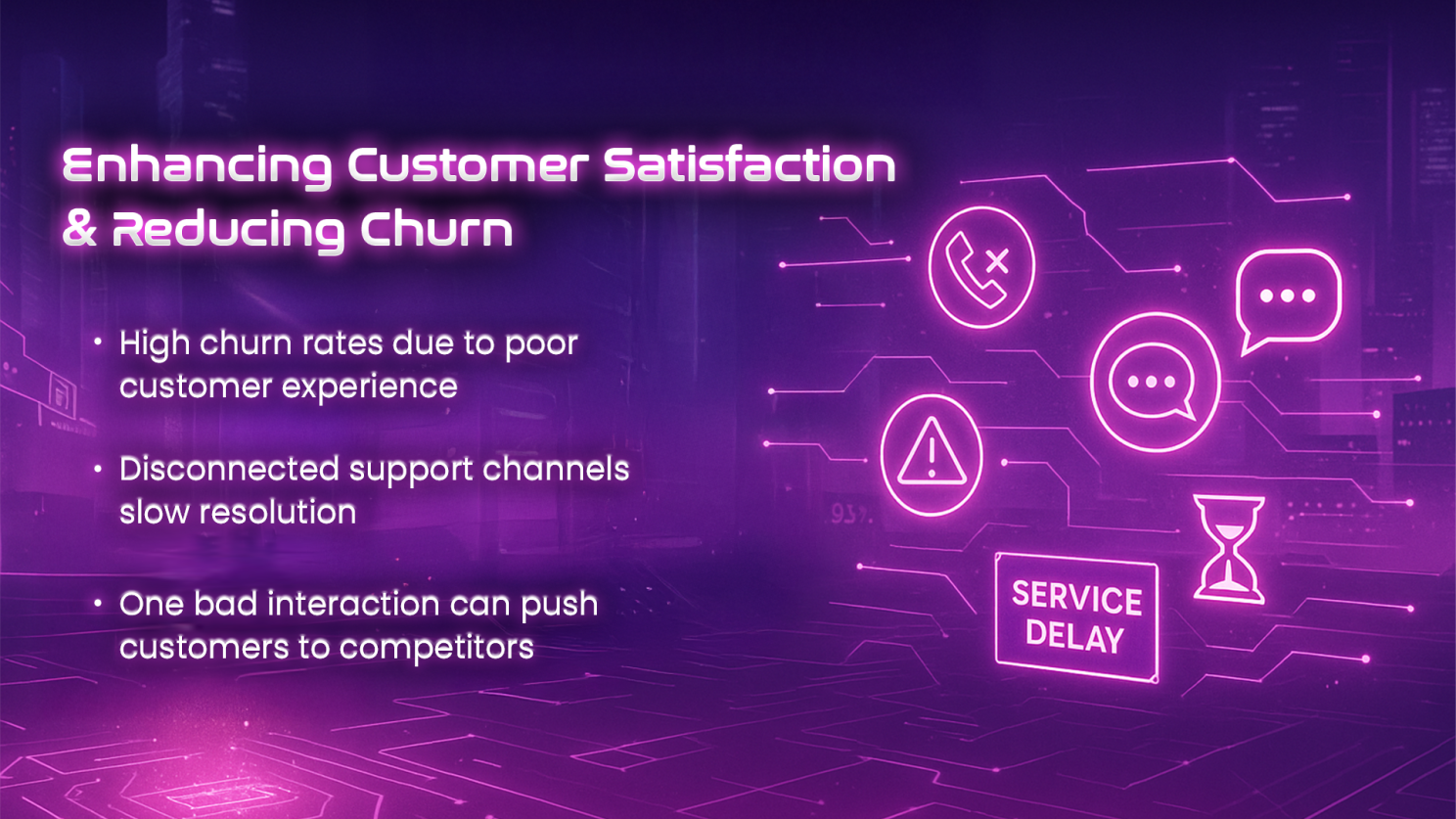
The telecom industry faces unprecedented pressure. Customers expect seamless connectivity, transparent billing, and instant support.
Yet, telcos often struggle with complex operations, service disruptions, and fragmented support channels.
👉 The result? High churn rates, with many customers ready to switch providers after just one bad experience.
To stay competitive, telcos must transform their customer experience. The key enabler: Artificial Intelligence (AI) turning reactive service models into predictive, automated, and customer-centric experiences.
Why is AI a Game-Changer for Telcos
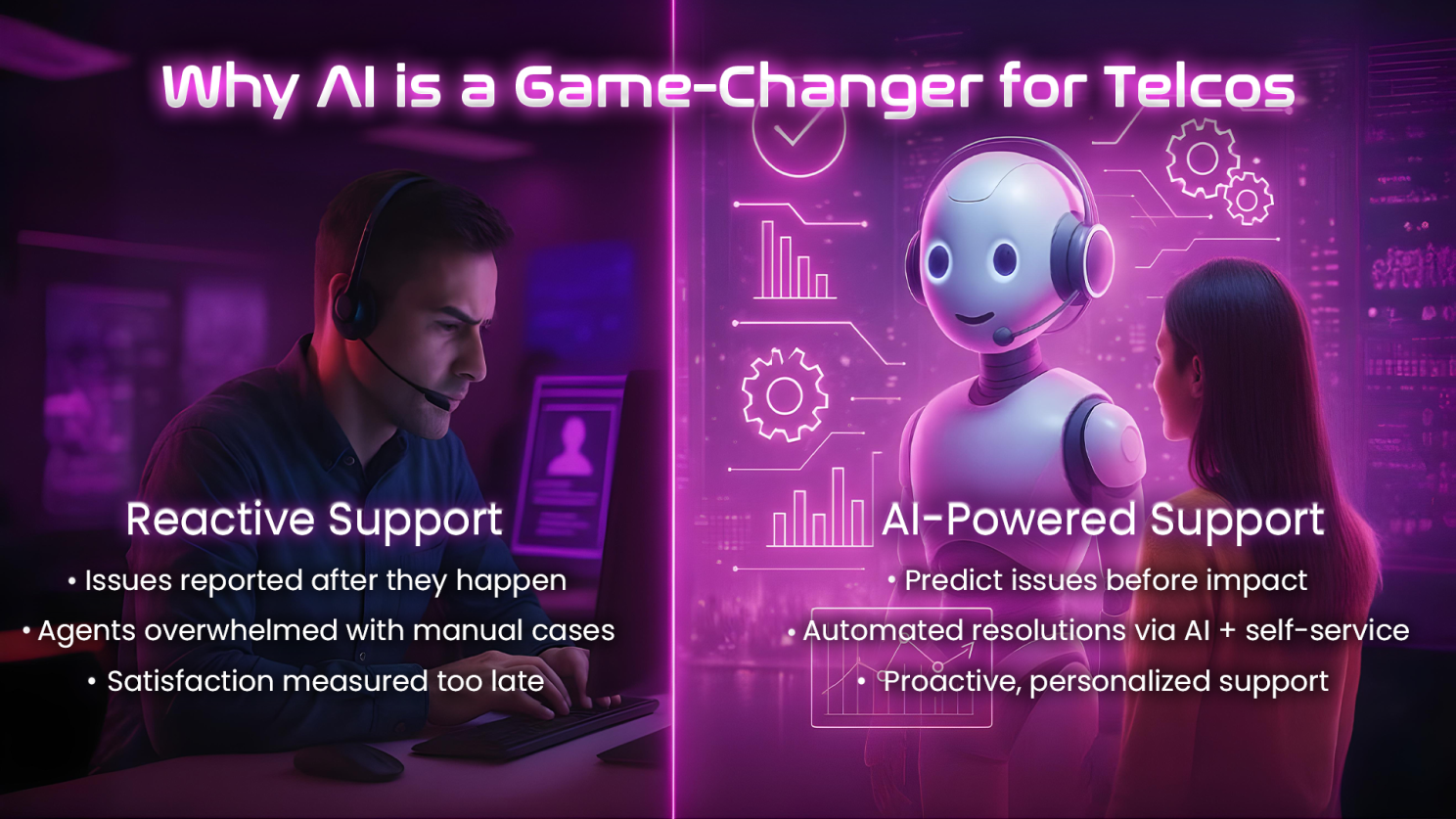
Traditional telco support is reactive: customers report issues, agents manually resolve cases, and satisfaction is measured after the fact.
But in a market where competitors are just a click away, waiting for the customer to complain is too late.
AI allows telecom operators to:
✅ Predict churn before it happens by analyzing usage data, network incidents, and customer behavior.
✅ Automate service resolution with virtual agents, self-service, and AI-powered troubleshooting.
✅ Personalize customer journeys with proactive offers, tailored plans, and real-time recommendations.
The Role of Generative AI and Agentic AI
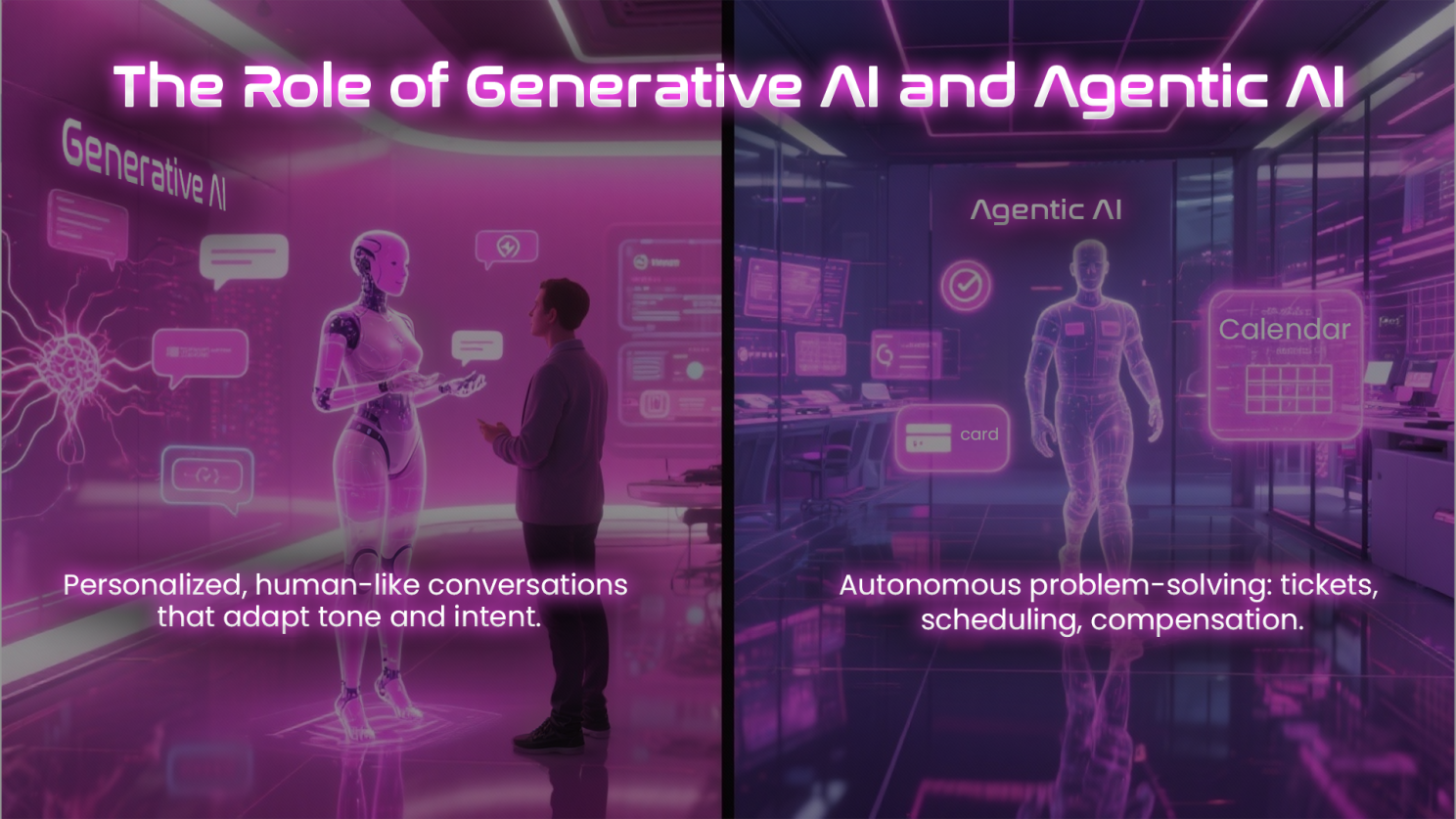
- Generative AI (GenAI): Creates personalized, natural conversations at scale. Instead of pre-scripted chatbots, telcos can deploy GenAI-driven agents that understand intent, adapt tone, and provide contextual answers.
- Agentic AI: Goes further by enabling autonomous problem-solving. Rather than just answering queries, Agentic AI can: • Open a ticket • Schedule a field technician • Apply compensation • Recommend a plan change
This moves telcos from reactive support to proactive service orchestration, significantly boosting satisfaction and loyalty.
Enhancing Satisfaction in Telco with AI
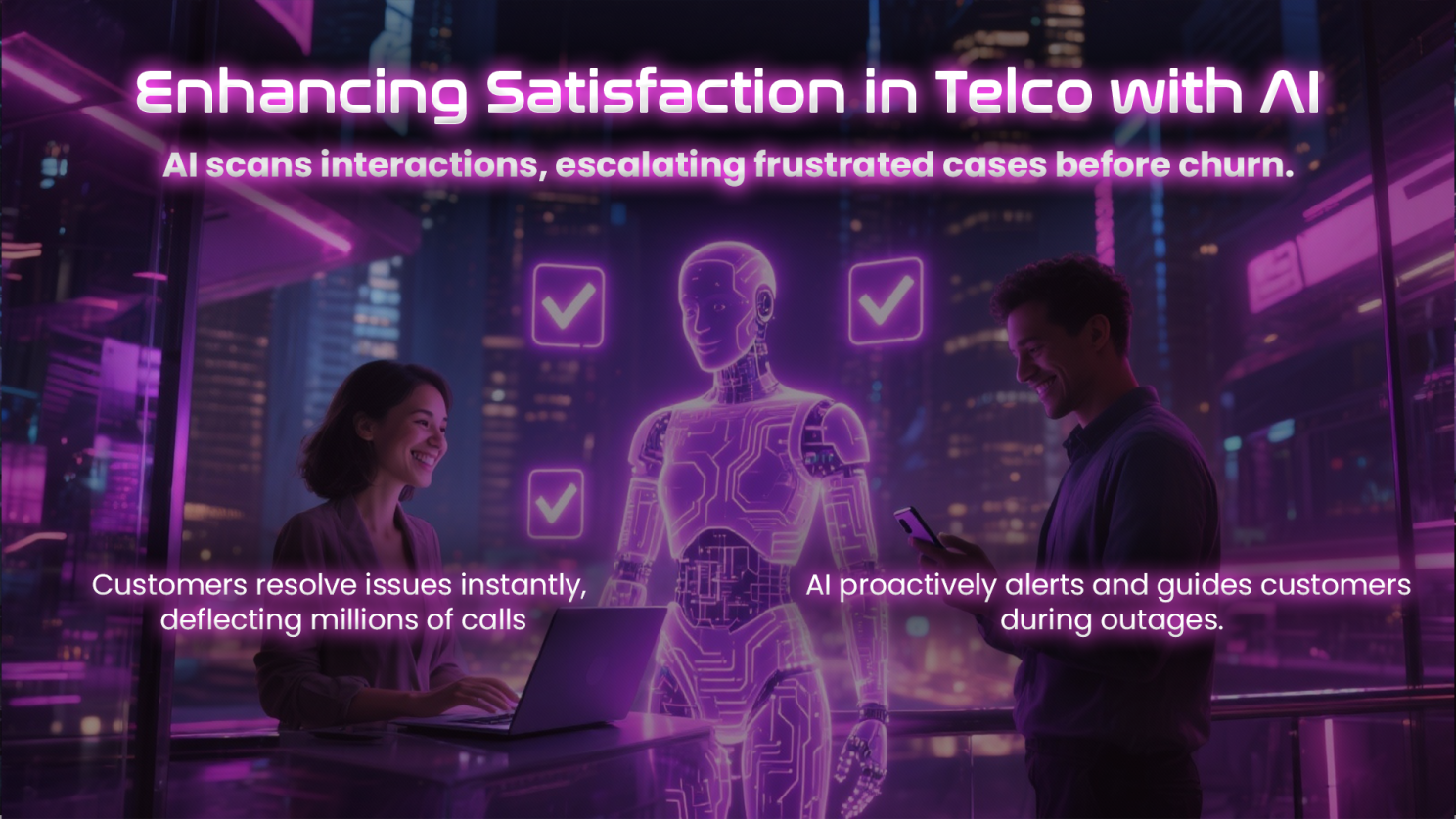
1️⃣ Virtual Repair & Self-Service Customers no longer want to wait on hold. AI-powered Virtual Repair agents allow them to diagnose and resolve issues instantly. Bell Canada, for example, deflects millions of support calls each year using AI-driven self-service.
2️⃣ Predictive Service Disruption Management AI monitors network health in real time. Instead of waiting for calls to flood in during an outage, the system proactively notifies affected customers and proposes solutions. This turns frustration into trust.
3️⃣ AI-Driven Sentiment Analysis AI can scan chats, calls, and emails to detect frustration. If a customer repeatedly complains about billing, AI can automatically escalate the case to a retention specialist before churn happens.
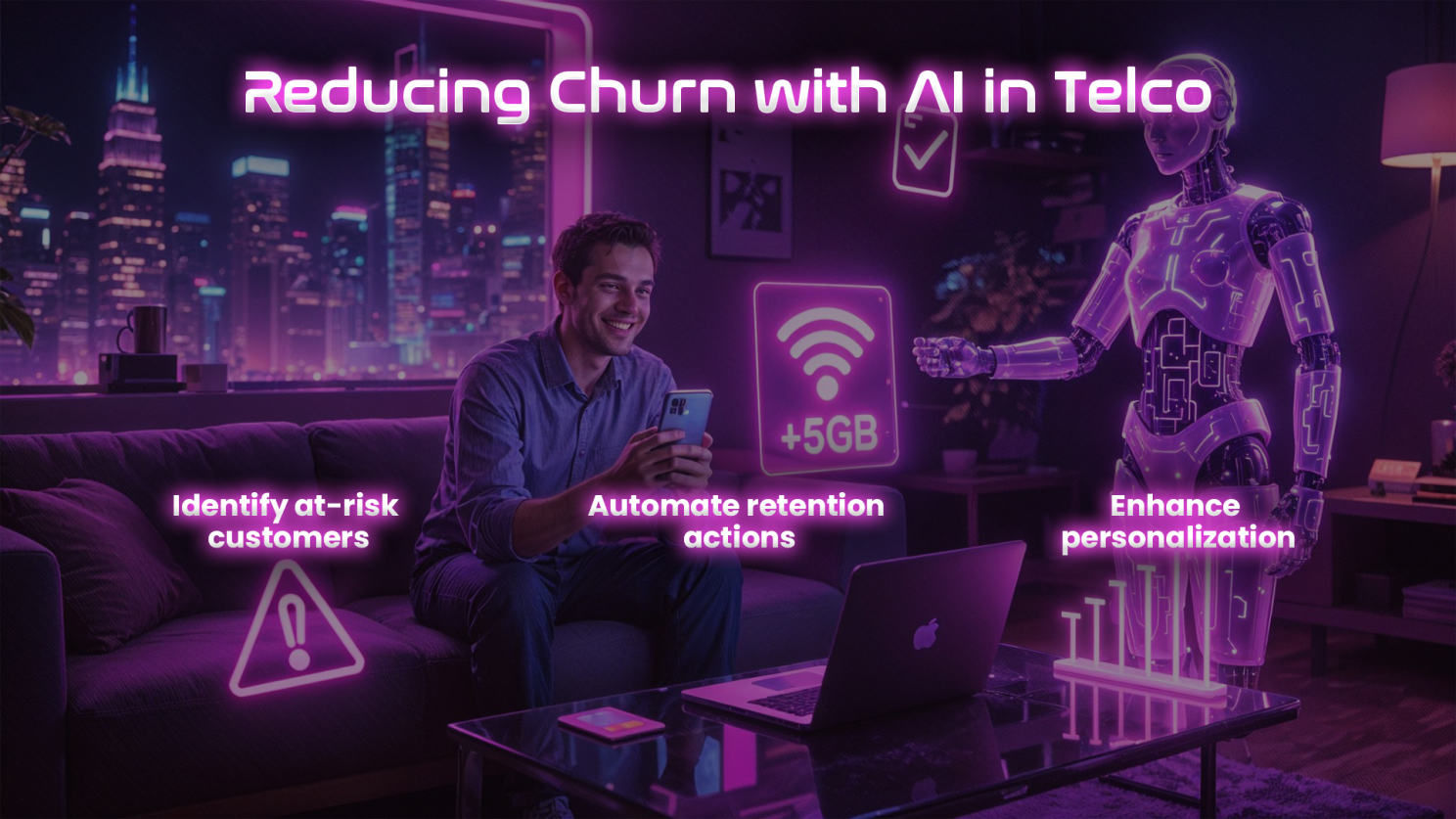
Reducing Churn with AI in Telco
Churn is costly: acquiring a new subscriber is 5–7x more expensive than retaining one.
With AI, telcos can:
✅ Identify at-risk customers (frequent calls, dropped calls, negative surveys).
✅ Automate retention actions (temporary discount, extra data, priority repair).
✅ Enhance personalization (recommend better-fit plans, ensure customers feel valued).
Example: A customer with repeated home internet outages could automatically receive a mobile data top-up as compensation avoiding frustration and churn.
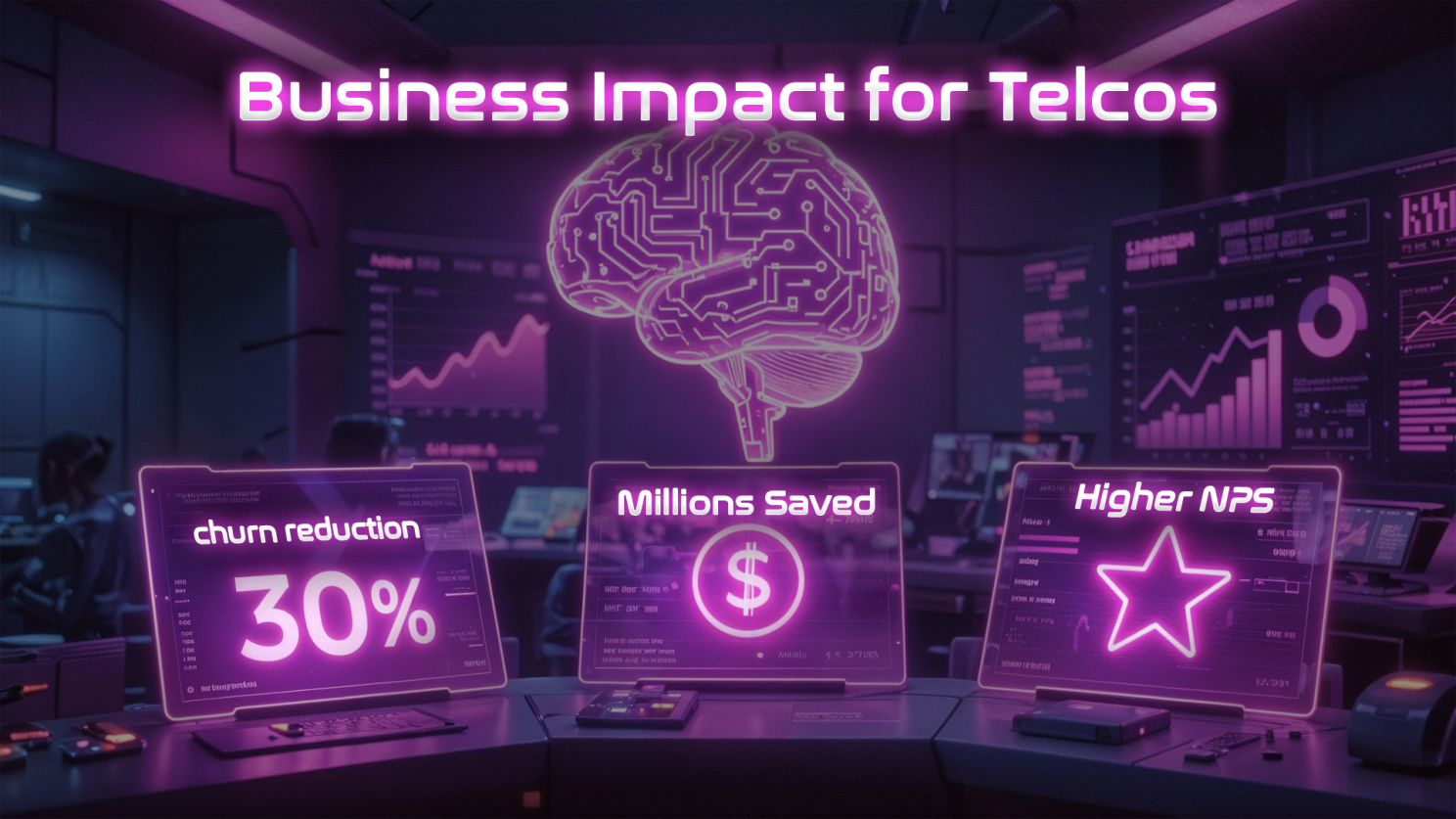
Business Impact for Telcos
AI-powered automation is already reshaping the telecom sector:
📉 Up to 30% churn reduction through predictive interventions.
💰 Millions saved via call deflection with chatbots & virtual repair.
⭐ Higher NPS (Net Promoter Score) thanks to faster, more transparent resolutions.
For telecom providers, AI is not just about efficiency it’s about survival.
In a saturated market where loyalty is fragile, automating satisfaction and proactively addressing churn is the difference between losing customers and building lifelong relationships.
By leveraging AI, GenAI, and Agentic AI with platforms like ServiceNow CSM, TSM, FSM, and AIOps, telcos can:
✨ Anticipate issues before they happen
✨ Deliver proactive, personalized support
✨ Transform network resilience into customer loyalty
In telecom, the providers who master AI won’t just reduce churn they’ll redefine what customer experience means.
- Contextual conversation and content generation in customer support and back-office processes.
- Agentic AI agents that can autonomously initiate workflows and execute decisions (within guardrails).
- Low-code extensibility so banks can adapt models, prompts, and workflows without heavy engineering overhaul.
By embedding GenAI into their ServiceNow deployment, banks can evolve from automation toward autonomous orchestration, reducing manual handoffs and increasing responsiveness